Showing posts with label happiness. Show all posts

Sunday, January 11, 2009

Steps of Faith....

At the root of all of the practical considerations and obligations we juggle day to day, lay four essential aspects of an individual’s life. They are the physical, emotional, intellectual and spiritual parts of our lives and as we proceed, we learn that finding balance between these four is our critical challenge. When we think of balancing our lives we often consider what we can do to achieve better balance. A lot of our talk is about steps we can take.

While most often considered a spiritual force, it is not reserved for religious purposes. When we take a step in faith, we are using an internal power that has the potential to change everything. We should use it wisely.

On a recent channel surf through my cable selections, I happened upon one of those now ubiquitous weight loss programs which focus on extremely obese people and their struggle to lose weight. The show featured a woman who, with evidence of before and after photos, demonstrated that before she had children, she was young and svelte. After giving birth her busy life working and caring for her children lead to gaining a pound here and there. Eventually she was so fat a film crew became interested in her. She blamed her obesity on having children.

I do not discount the weight women gain in pregnancy. Nor do I minimize the effort required to lose that weight after childbirth. My point is that to blame her obesity on having children completely discounts the fifteen or twenty years of emotions, attitudes and behaviors that are more likely the cause of her obesity. She has placed herself in a kind of prison, the bars of which are created by her own belief.

When she acts on that belief, she is, in a very powerful way, taking a step of faith. Faith does not necessarily imply God at the other end of it. Certainly, adhering to religious principals is an act of faith but faith and religion are two different things. Faith is a human tool that we all use. Every time we act or react because we believe something, we are stepping in faith. Tightrope walkers, for example, step out onto the rope believing that they can and will cross the rope safely. Their belief is well-founded on the hours of practice they have had but every tightrope walker is aware of the potential danger of falling. They simply do not believe that they will fall. If they believed that they were going to fall, they would never step out onto the rope.

The unfortunate thing for a lot of religious folks is that they associate faith with God or a miracle from God and leave it at that. There is a very real reason why many people ask God for a miracle and never get it. Faith itself is the miracle they are waiting for. When we learn to use faith appropriately, we unleash a power, call it spiritual if you like, that enables us to achieve our goals and aspirations.

When we are willing to take risks, however we define them; it is because we believe something is either possible or impossible. The trick is discerning the difference between what we know to be true and what we think or feel is true.

Some people think you need courage to take risks. That is not true. You need courage to face danger. You need faith to take risks. Risk and danger are two different things and so are faith and courage. It takes courage to run into a burning building to save a child. It takes faith to believe you can do it at all.

Every time I step in front of an audience, I act in faith believing that the audience will benefit from my speech, enjoy my performance and my client will consider my fee to be money well spent. It is like walking out on a tightrope. I have plenty of practice but the possibility of my failing is there. So, public speaking is a kind of risk I am willing to take.

It is easy to see faith involved in actively taking risks. We also need to see that faith is equally involved in not taking them and this is ultimately the point I am at pains to make. When we decide to not do something it is often because we believe that we will fail. In some cases, that is good. I will never step out on a tightrope since I am absolutely convinced I would fall off. That being said, what achievable goals or dreams am I avoiding simply because I have an unfounded, even irrational belief in failure?

If there is an aspect of our lives with which we are growing uncomfortable, if anything at all is going to change, we need to pay attention to what it is we believe about it. Once we clear up what we believe about the things we would like to change, the most formidable obstacles are gone.

It may sound like hocus pocus, psychobabble or even new age religion but the truth is that we act as a result of what we believe. We live our lives doing some things, avoiding others and likely wishing we could someday do still others all because of what we believe about the world, about other people and about ourselves and yes, even what we believe about God. Those beliefs may or may not be factual but we make them real to us.

We all have a spiritual side to our lives. It is that part of us that helps us cope with the unknown and, within the context of our own lives, the unknowable. Science gnaws away at the unknown but any honest scientist will admit that there is a lot we do not know. Until we know absolutely everything that is knowable, we will continue to take steps of faith, acting or not acting based on what we believe to be true.

So we are all stuck with faith of one sort or another. Faith is not something you can create, build up or muster but it is a natural part of being human. We act on it every day. Along our journey to find happiness, balance and purpose in life, we would do well to consider what it is we believe about every situation, condition or obstacle we face.

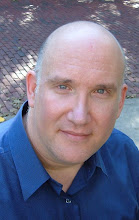
Joseph Onesta is a speaker, trainer and consultant. He publishes a free e-newsletter called Balanced Life. His company, Integrity HPI partners with companies to develop an "employer of choice" work environment.

Tuesday, December 16, 2008

Forget About New Year Resolutions!


There is nothing less life changing than a New Year Resolution. What may seem like an ideal time for change is an exceptionally bad choice. Most of us break our resolutions a few days, if not a few hours into the New Year. The problem is not only in our timing but in the resolutions themselves. We think we know what we want but…

Among the most common resolutions, getting fit or loosing weight is near the top of the list. Just under that is quitting some vice like smoking or drinking. And bringing up the rear is getting out of debt. What worse time of year could a person choose to attempt any of these goals? One party comes after another. Cookies, cakes and candy are everywhere. Drinking and smoking seem to go so well together, many of us cannot do one without the other. And, on average, holiday shopping adds between $900 and $1,500 worth of credit card debt to our financial woes.

It is no wonder that most resolutions are kaput as soon as the ball falls in Time Square. No sooner do we finish with that New Year kiss, we begin rationalizing a better time to start our resolutions. Tomorrow, that’s it, I’ll start tomorrow. But tomorrow never comes or if it does, it brings new excuses with it. Resolutions tend to be more life damaging than life changing. Many of us begin our new year with more failure and guilt than we do with purpose and good intention. So stop the madness.

Aristotle said, “Happiness is the meaning and purpose of life, the whole aim and end of human existence.” In other words, we want to be happy. When we choose our resolutions, we do so because we think that achieving those goals, whatever they may be, will bring happiness with them. It is the happiness we want.

Do not bother with resolutions until you know what you are doing. No one thing or condition can make us happy or unhappy. You have heard the adage that money won’t buy happiness. The opposite is equally true. The lack of money won’t buy unhappiness. Evidence of this fundamental truth is all around us. Embrace it.

So, before we start listing the things we want to change about our lives, we should spend a little time thinking about happiness--not about what we think will make us happy but about when we are aware of being happy.

If, as Aristotle asserted, we are truly looking for happiness, we should look for it where it already exists, not where we think it should be. Happiness is not trying to elude us as if we were playing a cosmic game of hide and seek. It is right there. Ask yourself these questions: When do I feel the greatest joy, satisfaction or the sense of accomplishment? When am I filled with warmth, love and kindness? When am I most confident and proud of myself? The answers to these questions will tell you more about yourself and your true happiness than success at any New Year Resolution.

I am not suggesting we content ourselves with our lot in life. We all have aspects of our lives which could use a little work but far too often, we work on the wrong things. We are driven by advertisers who suggest we will be happier if we were thinner, better looking, younger, sexier, more successful or more powerful. Why do we persist in believing that such things will make us happy when there is so much evidence to the contrary?

Perhaps this is why so many people are obsessed with Hollywood gossip. We somehow feel a perverted sense of satisfaction when people, whom we think of as having everything, fail to be happy. For heaven’s sake, look at Oprah--a wonderful person, loving, interested in the well-being of others, extremely successful, the epitome of Hollywood power. Let her gain a few pounds and we pounce on her like a pride of hungry lions. We thirst after the reason why that woman is not living in absolute bliss!

When we recognize our real happiness, we more clearly see the things in life that we have allowed to act as barriers to our prolonged and pervasive contentment. We may, for example, realize that we are happy when dancing and we might think that losing a bit of weight will help us spend more time on the dance floor. More often is the case that more time on the dance floor results in our losing weight! You see, the real barrier is not the weight but the reasons we give ourselves for not dancing.

Eliminating the barriers to happiness will not make us happy. Like New Year Resolutions, that is a loser’s game. When we focus our attention on the things that get in the way of our happiness, we spend too much time thinking about being unhappy. Life is too short to waste time on such things.

We can all find happiness in our lives, even if that happiness has been obscured to the point of being a mere glimmer. We often allow so many of our obligations and difficulties to get in our way that we almost entirely divorce ourselves from happiness. If you are going to make any resolution at all, let it be for you to find that glimmer of happiness in your life and give yourself the freedom to nurture it and let it grow.

Joseph Onesta is a speaker, trainer and consultant. His company, Integrity HPI: Human Performance Improvement partners with organizations to develop and "employer of choice" work environment.

Tuesday, October 28, 2008

Work As Play

If you get this, you'll improve your game, be more valuable to your employer, and frankly, be a lot happier in the long run.

Human beings have an infinite capacity to find ways of entertaining themselves. I recently heard about a South African sport called Kudu Spitting. A Kudu is a kind of antelope and participants collect the cherry-sized kudu droppings and see how far they can spit them. Yes, we are talking about kudu poop and yes, they spit it with their mouths.

Play is magic. It makes time seem to pass more quickly. No matter how strenuous or challenging the play is, we are motivated, energized and rejuvenated by it. Play inspires us to improve our performance. We strive to get better and better and when we are done, we look forward to the next opportunity to play.

Wouldn’t it be nice if work could be as much fun as our favorite games? Imagine having fun at work all day long and coming home afterwards filled with energy and looking forward to going back the next day!

Play can be as physically challenging and mentally stressful as work. Yet, we thrive on play while work can be soul destroying. Why is that?

Philosopher Alan Watts identified the critical difference for us. When we feel compelled or obligated to perform a task, it feels like work. When there is no sense of obligation, whatever we are doing feels more like play. When we treat everything we do, including work, as play, a sort of miracle happens. It all becomes rather fun.

Now, among mundane and boring jobs, bagging groceries has to be in the top ten. A few years ago, I took a job at the local grocery store while recovering from two spinal surgeries. I just needed to get out of the house and do something physical. In order to inure myself to the lack of mental challenge, I created a number of little games. I mentally evaluated how healthy each order was and devised a ranking system. I also challenged myself to see how quickly and efficiently I could bag large orders using fewer bags. As I collected shopping cars from the parking lot, I worked toward increasing the number of carts I could manage and navigate without losing control of them.

According to Watts, the key to my ability to convert bagging groceries into pure play was the fact that I didn’t feel obligated to do it. I was in that job because I had specifically chosen to do that work for my own reasons. But, it is not difficult for me to apply the same standard to anything that I do. I have chosen my career. I choose my clients. When I commit myself to a particular project, I voluntarily sign the contract. I may make that choice because I want or need the money but the choice is mine all the same.

According to an on-going work-life balance survey by Integrity HPI, 24% of survey participants feel trapped in their current job. Trapped, stuck, unable to break away, in other words, they feel obligated to continue. It might be difficult for those people to convert their jobs into play but they are the ones who would benefit most from doing so. It is possible that they are in the wrong job yet I suspect that they are more likely in the wrong mind-set.

If a hunter working in the South African bush could think up Kudu spitting, you can creatively find ways to make your job fun and exciting. Give it a shot. Have a go. You’re it!

Joseph Onesta is a Speaker, Trainer and Coach. The focus of his practice, Integrity HPI is making life and work better for people and for companies. Visit his website, http://www.integrityhpi.com for more information or to invite him to speak at your event.