Showing posts with label resolutions. Show all posts

Tuesday, December 16, 2008

Forget About New Year Resolutions!


There is nothing less life changing than a New Year Resolution. What may seem like an ideal time for change is an exceptionally bad choice. Most of us break our resolutions a few days, if not a few hours into the New Year. The problem is not only in our timing but in the resolutions themselves. We think we know what we want but…

Among the most common resolutions, getting fit or loosing weight is near the top of the list. Just under that is quitting some vice like smoking or drinking. And bringing up the rear is getting out of debt. What worse time of year could a person choose to attempt any of these goals? One party comes after another. Cookies, cakes and candy are everywhere. Drinking and smoking seem to go so well together, many of us cannot do one without the other. And, on average, holiday shopping adds between $900 and $1,500 worth of credit card debt to our financial woes.

It is no wonder that most resolutions are kaput as soon as the ball falls in Time Square. No sooner do we finish with that New Year kiss, we begin rationalizing a better time to start our resolutions. Tomorrow, that’s it, I’ll start tomorrow. But tomorrow never comes or if it does, it brings new excuses with it. Resolutions tend to be more life damaging than life changing. Many of us begin our new year with more failure and guilt than we do with purpose and good intention. So stop the madness.

Aristotle said, “Happiness is the meaning and purpose of life, the whole aim and end of human existence.” In other words, we want to be happy. When we choose our resolutions, we do so because we think that achieving those goals, whatever they may be, will bring happiness with them. It is the happiness we want.

Do not bother with resolutions until you know what you are doing. No one thing or condition can make us happy or unhappy. You have heard the adage that money won’t buy happiness. The opposite is equally true. The lack of money won’t buy unhappiness. Evidence of this fundamental truth is all around us. Embrace it.

So, before we start listing the things we want to change about our lives, we should spend a little time thinking about happiness--not about what we think will make us happy but about when we are aware of being happy.

If, as Aristotle asserted, we are truly looking for happiness, we should look for it where it already exists, not where we think it should be. Happiness is not trying to elude us as if we were playing a cosmic game of hide and seek. It is right there. Ask yourself these questions: When do I feel the greatest joy, satisfaction or the sense of accomplishment? When am I filled with warmth, love and kindness? When am I most confident and proud of myself? The answers to these questions will tell you more about yourself and your true happiness than success at any New Year Resolution.

I am not suggesting we content ourselves with our lot in life. We all have aspects of our lives which could use a little work but far too often, we work on the wrong things. We are driven by advertisers who suggest we will be happier if we were thinner, better looking, younger, sexier, more successful or more powerful. Why do we persist in believing that such things will make us happy when there is so much evidence to the contrary?

Perhaps this is why so many people are obsessed with Hollywood gossip. We somehow feel a perverted sense of satisfaction when people, whom we think of as having everything, fail to be happy. For heaven’s sake, look at Oprah--a wonderful person, loving, interested in the well-being of others, extremely successful, the epitome of Hollywood power. Let her gain a few pounds and we pounce on her like a pride of hungry lions. We thirst after the reason why that woman is not living in absolute bliss!

When we recognize our real happiness, we more clearly see the things in life that we have allowed to act as barriers to our prolonged and pervasive contentment. We may, for example, realize that we are happy when dancing and we might think that losing a bit of weight will help us spend more time on the dance floor. More often is the case that more time on the dance floor results in our losing weight! You see, the real barrier is not the weight but the reasons we give ourselves for not dancing.

Eliminating the barriers to happiness will not make us happy. Like New Year Resolutions, that is a loser’s game. When we focus our attention on the things that get in the way of our happiness, we spend too much time thinking about being unhappy. Life is too short to waste time on such things.

We can all find happiness in our lives, even if that happiness has been obscured to the point of being a mere glimmer. We often allow so many of our obligations and difficulties to get in our way that we almost entirely divorce ourselves from happiness. If you are going to make any resolution at all, let it be for you to find that glimmer of happiness in your life and give yourself the freedom to nurture it and let it grow.

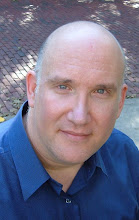
Joseph Onesta is a speaker, trainer and consultant. His company, Integrity HPI: Human Performance Improvement partners with organizations to develop and "employer of choice" work environment.

Monday, December 1, 2008

Paper Cuts, Hangnails & Cracker Crumbs in Bed


You've heard the old adage, "A stitch in time saves nine." The traditional interpretation is that if you do something right the first time, you will not have to do it again. It can also mean if something needs doing, the longer you wait to do it, the harder it becomes to do.

It may surprise you to know that when it comes to balancing our lives, little things can make a big difference. We are talking about really tiny things that are easy to do but get set aside for later--things like making the bed, doing the dishes, picking up the dry-cleaning or washing the car.

They nag at us like a paper cut, hangnail or cracker crumbs in bed; persistent until they simply cannot be ignored. No matter how logically inconsequential these little things may be, they are emotionally significant. They drain us when we think about them. We argue over them. Try to and get the kids to do them. And sometimes pay exorbitant prices to have someone else do them.

Sure, in some cases, we are talking about pure laziness. We can recriminate ourselves and make ourselves even more unhappy or we can face up to the fact that in balancing our lives, we have to juggle a lot of things and once in a while, some things just do not get done. The fact that the same things end up at the bottom of the list often enough to become recognizable indicates that we actually do something about them.

Identify them. Everyone can identify what those little things are. When I ask, they usually mention one or two. What are yours? Once you identify them and label them as something you would like to see change in your life, their priority on the to-do list changes. No longer are we just looking that thing that needs to be done but we are looking to do something about that thing. We are altering a condition, not doing a chore. Because the task is different, the priority is different.

In my life, one of the small irritating things that seemed to get out of hand was the dishes. If I am not careful, they still have the potential to pile up. No matter how much I complained, stomped my feet or pleaded for family cooperation, dirty glasses, cups, dishes and cutlery ended up in the sink. Sometimes I would be so busy that they would pile up for days and there would not be a clean cup or glass in the house.

Accept responsibility. Whatever it is, you are the one that is bothered by it, so the problem is yours. It is no good blaming other people. Byron Katie said, "Placing the blame or judgment on someone else leaves you powerless to change your experience.” Never has there been a truer statement. We realize that we may not be able to do much about the situation but we are completely capable of controlling the way we experience it as long as we accept responsibility for that experience.

No one else in my family seems upset by the dirty dishes. Not, at least, until they are hunting for a clean glass. In our home, the household chores are pretty fairly divvied up. The dishes are in my patch, so short of restructuring the whole household; the solution has to be mine.

Find compromise in resolution.
The reason these conditions are so frustrating is because they are not the way you want them to be. They may never be exactly the way you want them to be. Maybe the ideal is not possible and finding a livable compromise is the key to balance. If it cannot be perfect, it can be acceptable. What does acceptable look like?

In the ideal world, everyone in my family would wash, dry and put away every dish, glass or bit of cutlery they ever used. Short of perfection, what can I live with? I have to accept the fact that there will probably never be a day without dirty dishes in the sink.

Establish a new habit. Good habits are wonderful things. Habits have a magical way of becoming almost effortless. It takes a little discipline and, according to experts, three weeks to establish a new habit. Design a habit that will remedy the situation to the level of acceptability and just do it.

When I determined to do something about my frustration over the dishes, I decided that I would not go to bed with dishes in the sink. Waking up to that mess would just set my whole day off kilter. At the end of the day, I may be tired but rarely am I too tired to fill and run the dishwasher and wipe down the sink and countertops. Throughout the day, I move things to the dishwasher if I see them and have time. Tolerating dishes in the sink until the end of the day was my compromise. Since I am the first up, while the coffee is brewing, I unload the dishwasher and prepare for the day. My frustration over dirty dishes is virtually gone.

A sink of dirty dishes may seem like a small or even silly thing to be upset about. By identifying, compromising and making the effort to change ourselves in small ways, we can eliminate the little things that pile up and become obstacles to a balanced life. Those little things that really seem to get under our skin are life’s opportunity to learn how to manage when we are confronted by much bigger obstacles.

Joseph Onesta is a speaker, trainer and consultant with Integrity HPI.